
What Happened to Palliative Care?
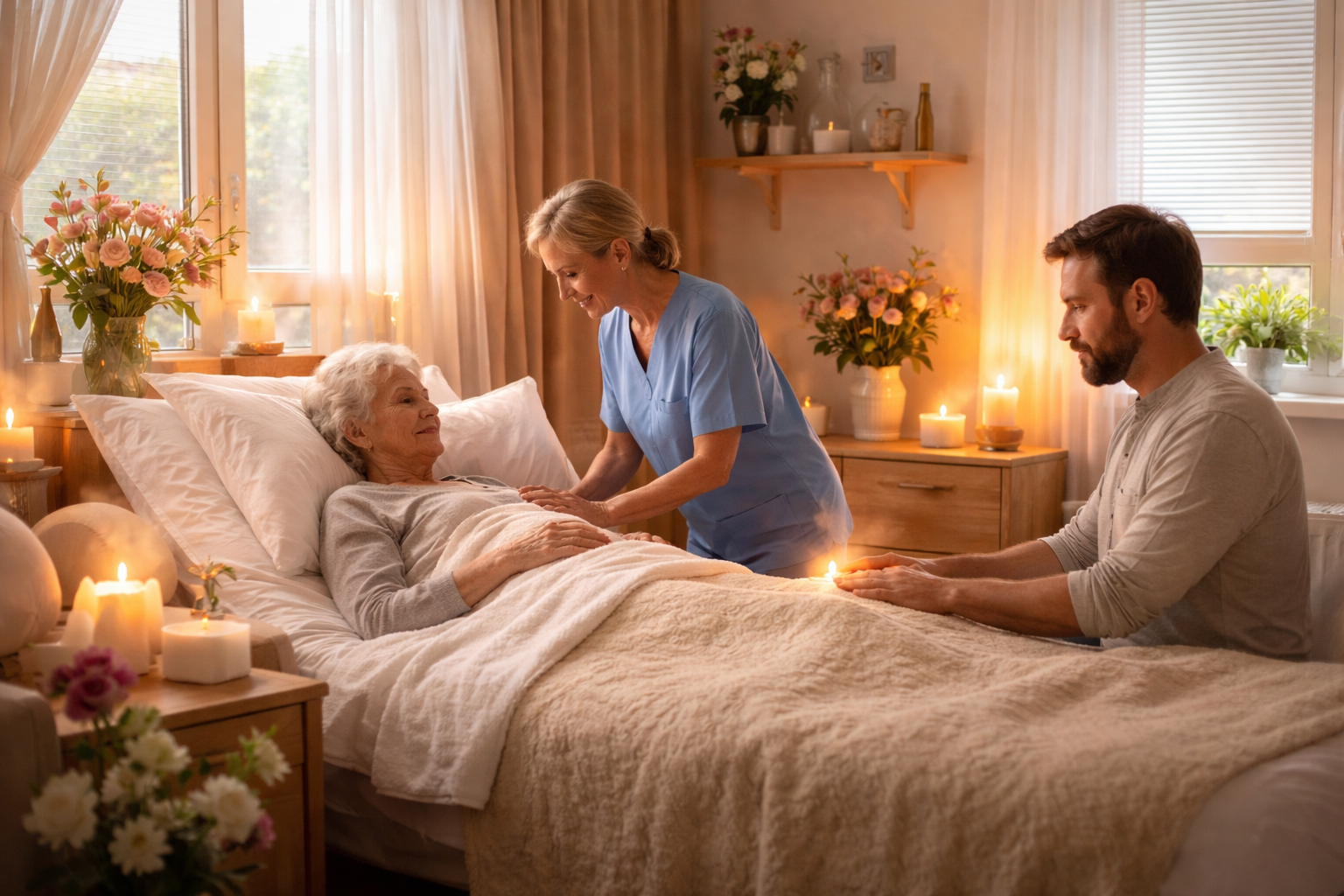
CARE being the operative word.
What Happened to Palliative Care?
The word palliative means to mitigate or alleviate — to ease suffering, to cloak harshness with comfort, to soften what cannot be cured.
When I trained as a nurse, palliative care wards were my favourite places to work.
Not because death was near — but because care was finally allowed to be human.
We understood that modern medicine had reached its limits, so we worked outside the box. We focused on dignity. On comfort. On quality of life. We nourished the person, not the diagnosis.
Patients were offered better food. Strong pain relief when needed. Massage. Their favourite meals brought in from home. Rainwater instead of treated water. Their own bedding if that helped them feel safe. Whatever eased fear, confusion, or discomfort, we did it.
Anything.
We knew these patients were suffering. We knew they were scared. And we did everything in our power to make whatever time remained as gentle and meaningful as possible.
And something remarkable often happened.
Despite grim prognoses, many of these patients stabilised. Many went home. Many lived on, sometimes far longer than expected, with improved comfort, clarity, and connection.
That was palliative care.
Part of my role as an ex remote area and consulting nurse involves mentoring young nurses today. It is not an official role but once new students or graduates discover my background, they often seek my guidance.
They, along with experienced and burnt out nurses, are frustrated at the direction ‘care’ has taken. In the words of one nurse who simply retired long before she was due, taking decades of care and experience with her, “It is legal, sanctioned, unofficial euthanasia but without the care and dignity. They have been written off and are simply left to die.”
So what does palliative care mean today?
Officially, it still means relieving suffering.
In practice?
It too often means isolation, deprivation, and abandonment.
I have witnessed this firsthand with two loved ones in recent years; experiences so confronting they sent me into open conflict within hospital settings.
In one case, a semi-comatose loved one appeared to be silently screaming in her sleep, yet no analgesia was provided. The attitude was that she was heavily sedated and wouldn’t understand the pain. Only once she was given morphine, did she pass peacefully.
In another, a loved was written up for nil by mouth and died from hunger and dehydration, one of the most painful and cruel ways to die. He was so heavily drugged he could not speak, though he tried. Not one nurse or doctor came to check on him until I advised them he had died.
His body had overheated from within; every mucosa dry and cracked. There was no regular bed bathing, no turning to prevent pressure sores, no mouth care, no gentle touch. No comfort.
When challenged, staff stood with arms folded and said:
“Anything we agree to will only be to humour you. He is unaware of his surroundings.” Yet he was trying to talk and only hours previously, before they removed the IV or any care at all, he was walking and talking freely.
That statement alone should stop us all cold. The doctor who agreed to actually offer palliative care, was then seen by another family member running out the side door to his car. So no hand-over, no instruction to carry out what was promised.
This is not palliative care. This is neglect, sanitised by protocol. Under the guise of our free medical system. The truth is, if he was a private patient he would have received every care that should be afforded to every patient.
And it is not rare. Two examples in one family; how many families are exposed to so-called palliative care?
This is happening to babies. To children. To adults. To the elderly — especially the elderly. It stands in direct opposition to the spirit of the Hippocratic oath and to everything palliative care was meant to be.
There is another way
In integrative health, there is an entire world of modalities capable of offering comfort, relief, and dignity at end of life:
Hydrotherapy
Frequency and music therapy
Colour therapy
Homœopathy
Animal-assisted therapy
Chiropractic care
Reiki
Bowen therapy
Reflexology
Gentle bodywork and touch-based therapies
Later on as a physician, I offered palliative care acupuncture to comatose patients or those struggling with end-of-life pain. That is not permitted any more. Why?
There is no shortage of trained, compassionate practitioners willing, even eager, to support patients within hospital settings. What is lacking is not skill or willingness, but institutional permission.
And let’s be honest: permission is often withheld not because these approaches lack value, but because they do not align with cost-cutting models of care. But what if the practitioner waiting in the wings is willing to offer these modalities free of charge? Is it then fear of being shown up? Exposure of neglect or failure?
There IS research, experiential proof, case studies, personal stories. Only ego says, “It hasn’t been scientifically proven,” or ‘It won’t make a difference,” or even, “It’s quackery.” Compared to what? Obscene cruelty and negligence?
Integrative care has happened from the beginning, it happens in hospitals, hospices and nursing homes around the world every day. Just not in ‘civilised’ nations. Yet all around the world, it is happening at home, without funding, subsidies or support.
It is time for change
Palliative care should never be about hastening death through deprivation. It should be about relieving suffering through presence, nourishment, comfort, and dignity.
It is past time for a truly wholistic, integrative, round-table model of care; one that places the patient, not the balance sheet, at its centre.
Because how we care for the dying says everything about who we are as a society.
And right now, we can — and must, do better.