
Hegemony: A System Built On Patriarchy, Racism and Elitism
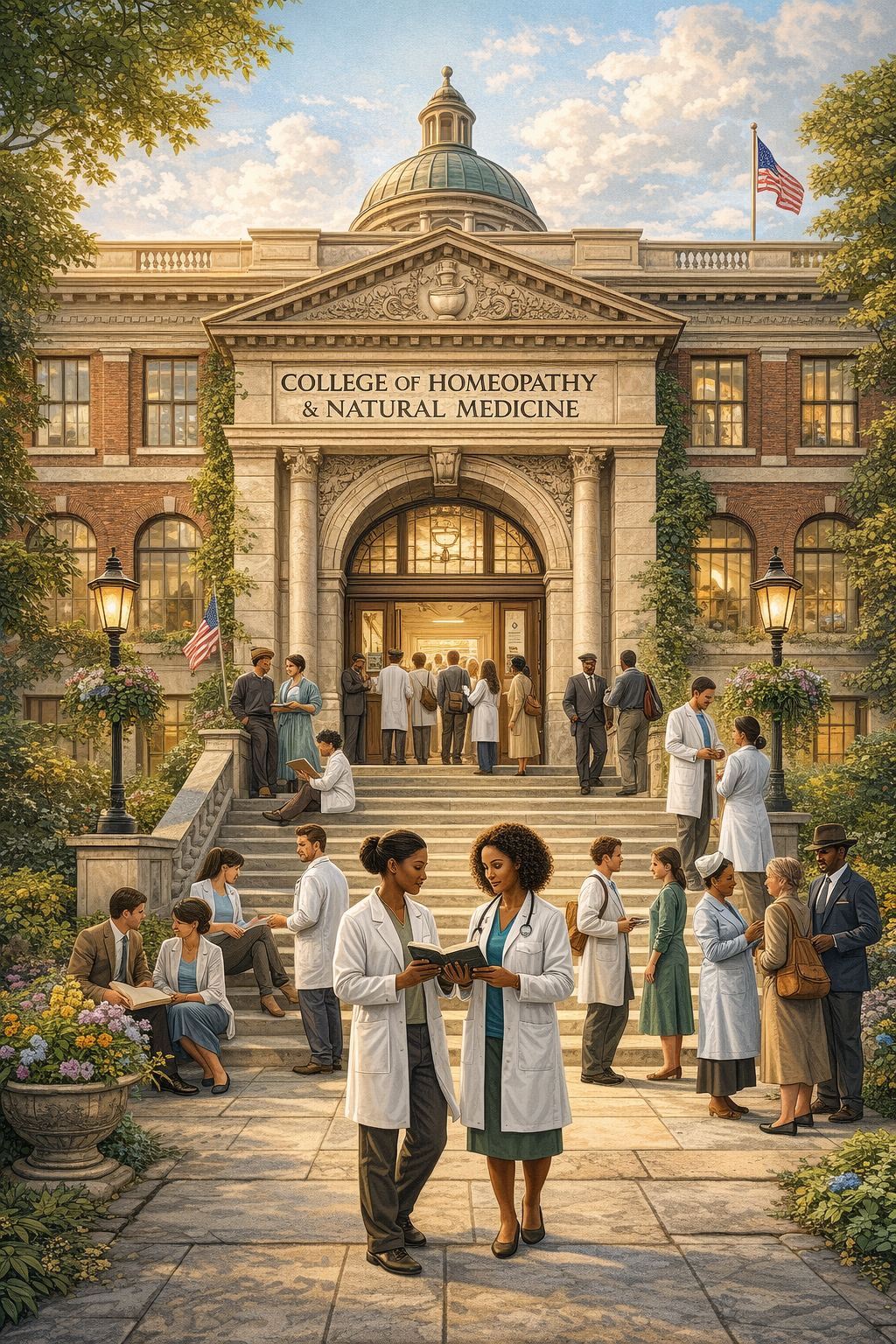
The Flexner Report and the Rewriting of Medical History
How did modern medicine appear to evolve so quickly in the early twentieth century? After all, scholars and intellect had always been; the original scrolls and documents going back to Greek, Latin, African and various intellects all over the world still make today’s knowledge pale in comparison.
Only ignorance could dismiss all the good in modern medicine. Likewise, this same ignorance is happy to dismiss the much longer history and the good in traditional medicines. Once, they co-existed and many would argue that the divide came as we ‘evolved’. Nothing could be further from the truth.
Money, power and influence played a far greater role than most people realise. In the late 1800s a challenge began between various nations (UK, US, EU); a veritable war of elitism and power. 1910 Abraham Flexner published Medical Education in the United States and Canada, funded by the Carnegie Foundation and strongly supported by ‘philanthropic’ networks connected to Rockefeller wealth. This document reshaped the entire structure of medical education and, in doing so, rewrote the story of what counted as legitimate healing.
At round 7 BILLION in today’s money, the myriad entities involved in this iconic paper changed the western world forever. This amount may not seem much, considering some pharmaceutical companies have paid the equivalent in court for fraudulent dealings and the effects of their wares, but the overall cost is incalculable in losses, kickbacks, handouts and payoffs. And it is all so civilised and noble on the surface.
The report remains celebrated for standardising scientific training, yet even mainstream academic sources are finally now acknowledging that the reforms came with deep and lasting social costs.
Meanwhile, another homœopathy-supporting family across the channel (Rothschilds) diverted funds away from the older style medical schools to the new models, empowering them across the EU.
Within fifteen years of the report, 89 of the 155 medical schools Flexner reviewed had closed, including five of the seven schools that trained Black physicians. The loss of these institutions had consequences that still echo today in the global shortage of Black doctors and the structural barriers that persist in medical training.
Article discussing these impacts
https://www.aamc.org/news/aamc-renames-prestigious-abraham-flexner-award-light-racist-and-sexist-writings
A second academic discussion describing the lasting barriers for women of colour in medicine can be read here
https://www.jmir.org/2023/1/e47773/
A century later the evidence is clear that the reforms did not affect everyone equally. They reshaped who was allowed to practise medicine, who could afford to study, and which forms of knowledge would be permitted to survive.
Before 1910 the landscape of health care was diverse and pluralistic. It took another 15 years for almost all Homœopathic hospitals (gold standard at the time) to close and be absorbed into this new system. Homeopathic colleges, naturopathic schools, eclectic medicine programs, midwifery traditions, and historically Black medical colleges all contributed to a wide network of care; one which the last 5 years have served to attempt to restore through disillusionment.
Many schools had served communities ignored by elite institutions. Fees were lower, entry pathways were broader, and women were entering the profession in growing numbers. By the early twentieth century women were being accepted into 91 of the 155 medical schools in North America. Within decades of the reforms their representation declined dramatically as schools closed and hospital internships became harder to access.
The same pattern affected Black physicians even more profoundly. After the closures that followed the report, only Howard and Meharry remained to train most Black doctors for generations. Scholars now recognise that the report reinforced structural racism by limiting the role Flexner believed Black physicians should play and by raising barriers to entry that excluded most Black students for decades.
How did this happen? The loss of skill, knowledge and possibilities is immeasurable even today.
Simply, money. This transformation also reshaped the economics of medicine. Training moved into universities with expensive laboratories and hospital affiliations (a foundational tenet still in place today). Education became longer, more costly and more exclusive. Entry into medicine increasingly required wealth or access to elite institutions. Working class students were gradually pushed out.
At the same time, whole fields of practice were dismissed as anecdotal or unscientific. The shift created a new hierarchy in which pharmaceutical and surgical interventions became the dominant standard of care. Other traditions were marginalised, defunded or forced outside the mainstream. Much of the wealth thrown at this new paradigm was funnelled into advertising and media manipulation, even movies and TV shows.
This also continues today; how many series or movies are there, that include anything but the weird little bead-wearing freak waving herbs or chanting whenever the storyline includes a natural healer? How many shows simply talk about a character whose life was saved using ANY of the hundreds of modalities available globally?
It is often forgotten that many breakthroughs in health occurred long before this consolidation.
Black medical schools contributed to advances in public health, sanitation & infectious disease care in communities mainstream institutions ignored.
Women made extraordinary contributions to science and healing despite systemic exclusion. Marie Curie’s work on radiation transformed the understanding of disease and laid foundations for modern imaging and cancer therapy.
Melanie Hahnemann played a central role in preserving and advancing the homœopathic tradition globally during the nineteenth century, advocating for its development and teaching at a time when women rarely held influence in medicine. In fact, she was the first female globally to be honoured with a doctoral degree; something that is still ignored in favour of the first female to receive a degree from one of the newer Carnegie-Rockefeller funded medical schools.
The history of philanthropy during this period is complex and often contradictory. Historical research documents that John D Rockefeller personally used homœopathic physicians and supported homœopathic treatment within his family while simultaneously funding large scale reforms of medical education.
Historians note that Rockefeller expressed support for homœopathy and sought fair treatment for it even while funding institutions that ultimately prioritised biomedical research and laboratory medicine; the same priorities that resulted in the demise of homœopathy as not only an everyday household addition but a leading modality in its own right.
Research discussing Rockefeller’s use of homœopathy
https://pmc.ncbi.nlm.nih.gov/articles/PMC12318542/
These contradictions highlight how the story of modern medicine is not a simple tale of progress. It is a story of power, funding and institutional influence shaping which forms of knowledge were preserved and which were sidelined.
The Flexner reforms ‘centralised health care, raised educational standards and expanded scientific research’. They also narrowed the definition of medicine, reduced diversity within the profession, and reshaped access to care. The result was a system increasingly centred on universities, hospitals and laboratory science, with pharmaceutical and surgical interventions positioned as the new gold standard.
More than a century later the consequences continue to shape medical training, access and public trust. The true cost will never be measured; loss of livelihood and life - including the billions of laboratory animals this system believes are vital to prove their various ideals.
Understanding this history is not about rejecting modern medicine. It is about recognising how the system came to be, who was left out along the way, and why debates about medical authority and integrative health remain so charged today.
The new threat facing us now is the incremental hegemonic process of reabsorbing ‘fringe’ therapies back into modern medicine. Today, there exists some 4.5 million ‘alternative’ professionals globally. Colleges are now teaching electives for doctors to do quickie courses to not only practice in professional fields but with the goal of making each of these therapies medical once again, what happens to those actually trained in their modalities?
The move began circa early 2000s (originally promised by the WHO to be the era when so-called alternatives would be formally recognised) to deregister, remove provider numbers and insurance status from formally trained natural health professionals. This created a deliberate divide as lesser-knowledge therapies were chosen for recognition while practices such as homœopathy were sidelined. Of course this happened much earlier; in the 80s as the fringe dwellers stood collectively to find for recognition of osteopathy and chiropractic, the lines were drawn and they rose in status above the others. This of course did not stop the medical fraternity from dismissing either.
Addendum:
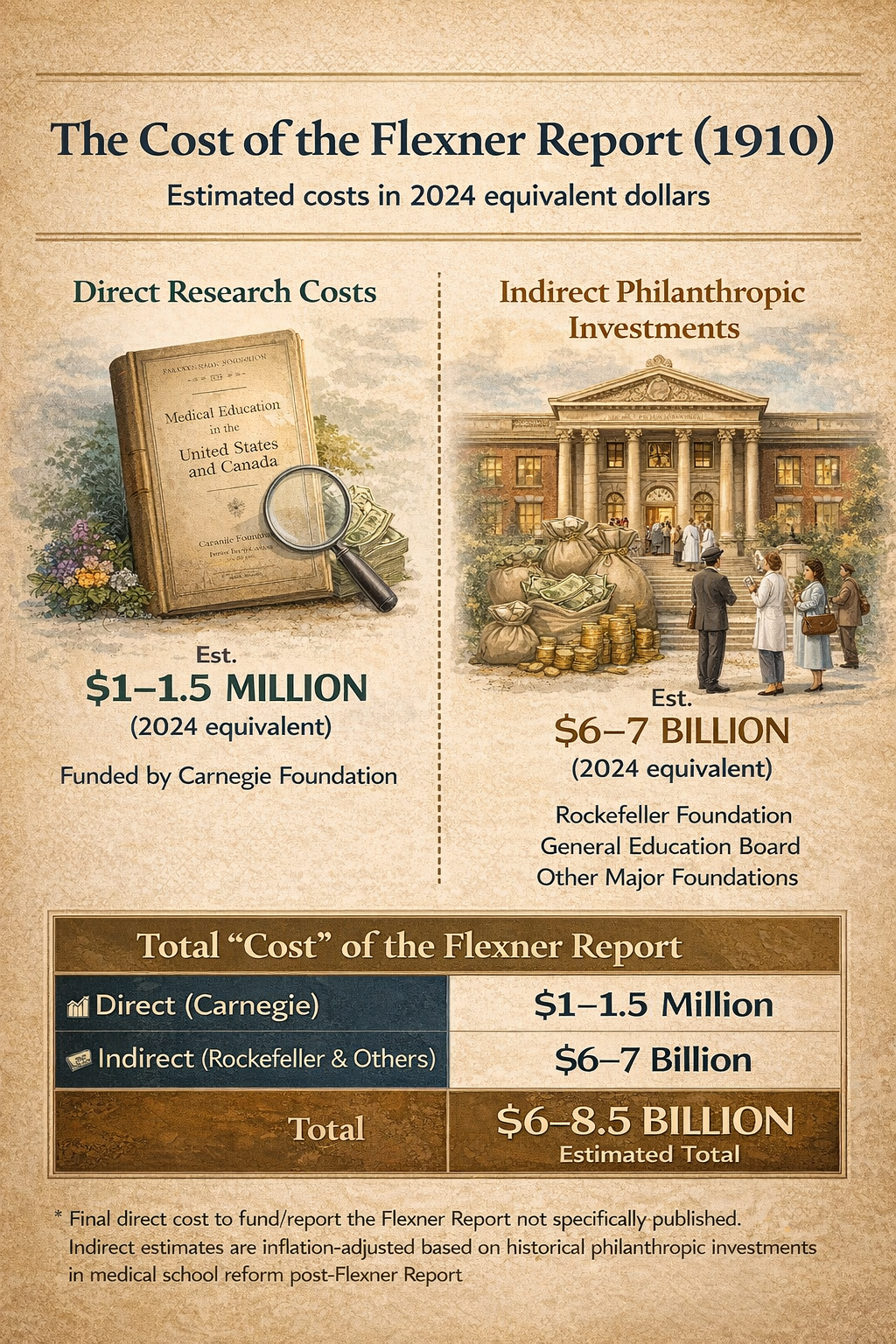
The Flexner Report (Flexner, 1910), commissioned and funded by the Carnegie Foundation for the Advancement of Teaching, marked a turning point in medical education in North America, and across the world. While the exact cost of Flexner’s research and publication is not documented, the broader financial impact of the report was immense. Following its release, major philanthropic organizations including the Rockefeller Foundation and the General Education Board invested heavily in implementing its recommendations, restructuring medical schools to align with a university-based, laboratory-focused model.
The True Cost
Historical analyses estimate that approximately $500 million (early 20th-century dollars) was directed toward medical education reforms associated with the Flexner Report, equivalent to roughly $6–7 billion today (Bynum, 2008; Philanthropy Daily, n.d.; Starr, 1982).
Collectively, these sources illustrate that the Flexner Report’s total “cost” encompassed not only the production of the report itself but also the massive mobilization of the juggernaut (and tax dodge) philanthropic resources that reshaped medical training and indirectly contributed to the decline of alternative and natural medical schools (still in existence today).
Bynum, W. F. (2008). The history of medicine: A very short introduction. Oxford University Press.
Flexner, A. (1910). Medical education in the United States and Canada: A report to the Carnegie Foundation for the Advancement of Teaching [Flexner Report]. Carnegie Foundation for the Advancement of Teaching. https://archive.carnegiefoundation.org/publications/pdfs/elibrary/Carnegie_Flexner_Report.pdf
Philanthropy Daily. (n.d.). The Flexner report, philanthropy, and medical school funding: Pre-1918 pandemic insights. Retrieved February 10, 2026, from https://philanthropydaily.com/philanthropy-the-pre-1918-pandemic-flexner-reports-effect-on-med-schools-and-ed-schools-now
Starr, P. (1982). The social transformation of American medicine. Harvard University Press.
And all of this, before we even touch on the foundation of modern epidemiology - erroneous half truths, politics and heavy funding of the germ theory.
It is hoped with new rumblings that the Carnegie-Rockefeller-Rothschild system is totally dismantled and rebuilt with equity. Time will tell.
Research:
Microbiome studies: Diversity in gut, skin, and respiratory microbiomes is correlated with resilience to infection and chronic disease.
Cho & Blaser, 2012, “The human microbiome: at the interface of health and disease.” Nat Rev Genet.
Immune modulation & nutrition:
Calder PC, 2020, “Nutrition, immunity and infection.” Proc Nutr Soc.
Casanova & Abel, 2023, “Host genetics and susceptibility to infectious disease.” Science
Chung & Calder, 2022, “Nutrition, inflammation and immune function.” Clin Exp Immunol.
Flexner Report Fallout:
Starr P, 1982, “The Social Transformation of American Medicine.” Harvard Univ Press.